
Post 21: Jesus, God's Greatest Gift!
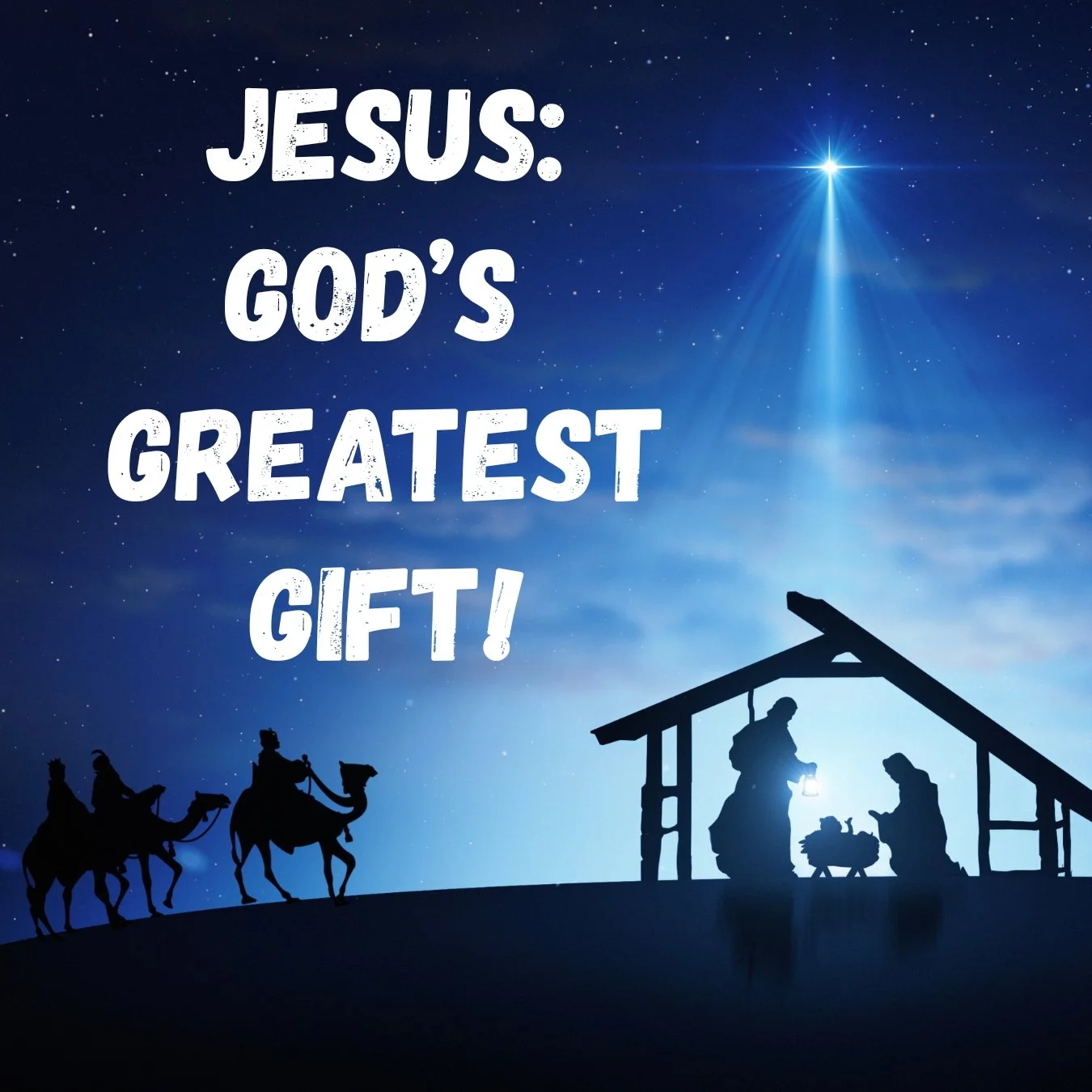
Image: graphic of the Nativity Scene of the birth of Jesus Christ in the manger, with Mary and Joseph surrounding him, and the 3 wise men coming to meet Jesus.
Post Summary: In this post, I discuss the meaning of Christmas, how my family typically celebrates the holiday, ending with post with the gospel message of the salvation of Christ!
In preparing to write this article, I did a bit of very light research and came across some interesting tidbits of information about Christmas, so I decided to share of those tidbits here.
What is Christmas
Wikipedia defines Christmas as "an annual festival commemorating the birth of Jesus Christ, observed primarily on December 25 as a religious and cultural celebration among billions of people around the world. As early as the 2nd century, Christians were celebrating the Lord's birth with different festivals and feasts. The actual celebration of Christmas eventually evolved from it's biblical basis celebrating of the birth of Jesus Christ to more of a celebration blending ancient pagan winter solstice festivals like Saturnalia and Yule with other Christian traditions.
Saturnalia was an ancient Roman holiday honoring Saturn, the god of the harvest, which was celebrate at the Winter Solstice. Yule is an ancient Germanic and Norse winter festival celebrating the winter solstice, marking the rebirth of the sun and the return of longer days, which is observed by modern pagans and heathens around December 21st with traditions like feasting, feasting, Yule logs, evergreens, and honoring ancestors.
The practice of wassailing, or door-to-door singing and gift exchanging, generally included a beverage called a warm alcoholic beverage made from mulled hot cider, ale or wine and spices. There is also a version of Wassailing in which people visit in cider-producing countries of England, would hold ceremonies that involved singing and drinking to the health of the trees as a way of pronouncing blessings on a tree so that it would bear fruit.
The celebration of Christmas also brought about historical and religious conflict with the Puritan peoples, who were English Protestants in the 16th-17th centuries that sought to "purify" the Church of England of its many lingering Catholic practices. In 1647, English Puritans banned Christmas, viewing it as a sinful, celebratory holiday and enforced fasting instead.
Historically, Christ's Mass was replaced or integrated with older midwinter festivals (like Yule) celebrated by Anglo-Saxons, which marked the winter solstice. Modern Christmas celebrations blended some of the aforementioned dark elements, from pagan rituals (mistletoe, feasting) to scary folklore (Krampus, spirits) and raucous behavior, highlight how Christmas evolved from ancient, sometimes frightening, winter celebrations into the sentimental holiday we know today.
Christmas became more traditionally and culturally a time of winter celebration for families to gather together, and to share in festive meals, and exchange gifts. The gift giving symbolized God's gift of Jesus to the world and the Magi's (Wise Men's) Gifts to the newborn Messiah, Jesus. Also, It is worth noting that the d addition of traditions like December 25th Christmas Day celebration, and the decoration of trees homes came later from non-biblical sources.
The Cultural meaning of Christmas
Many of us view christmas as this time of great fun, fellowship and family over gift giving and family gatherings. In my immediate family, Christmas time almost always includes a Christmas Eve church service. In our family, we also almost always buy a Christmas tree and decorate it with ornaments, as well and purchase and wrap gifts for other family members and arrange them underneath the tree. We also decorate the house with common Christmas decorations like wreaths, poinsettia plants, Christmas lights, and other festive decorations.
During the Christmas season, we typically watch more Christmas themed TV shows and movies, and Christmas-themed music is generally heard in our house. Frequently, our Christmas holiday seasons would also include more participation in giving back to the community through community gift giving initiatives like Families Helping Families Holiday Gift Drive. We would also drive through our neighborhood and nearby residential areas to see how others decorate their houses with lights and holiday yard scenes.
Our Christmas family meals generally include many traditional American holiday foods. The feast included but was not limited to: honey baked ham, roasted turkey, sweet potato soufflé WITH PECANS (my mom's use of capital letters to illustrate the absolute necessity of the addition of pecans on the soufflé was not to be missed LOL!), collard greens or some other green vegetable like string beans, corn casserole, potato salad, dinner rolls, a pound cake (either lemon or plain with a light coating of icing) and according to mom, the star of the show being southern Sweet Tea! Between our own family holiday meal and attending other family members meals for Christmas Eve or Christmas day and taking home plates of food from other parties, we would have enough food left over for several days worth of meals lol!
Why Christmas is not joyful for some people?
I am not shy about saying how generally joyous my Christmas holidays have been in my family, but I would be remiss if I did not also recognize that the thought of the holiday season does not elicit feelings of joy for everyone. Many people have a less favorable view of Christmas, which may stem from many of the difficult issues and situations discussed below.
Difficult family dynamics such as existing tensions, disagreements, or complex blended family situations can be amplified in close quarters and during holiday gatherings. The loneliness of being separated from family or living alone can lead to intense loneliness, especially when surrounded by others' celebrations. Loss and the grief of losing loved ones, especially those whose loved ones died during the holiday season can make us feel less joy around Christmas.
Societal pressure of the "be happy" attitude, constant media portrayals of joyous holiday gatherings, and often unrealistic expectations of holiday perfection clash with personal struggles or quiet realities of life. Those experiencing financial strain often see the increased costs of travel, buying gifts, and hosting gathers as something that would only exacerbate their financial anxiety. Grappling with physical or mental health challenges can also have a negative impact on how one views the holiday season.
Especially in cases where such pain and trauma is an on-going issue, it is understandable that the negativity behind these things can take center stage, often substituting bitterness and discontentment in place of the joy and gratefulness we ought to have at even still being alive for another holiday season.
The real meaning of the word "Christmas"
Though our individual view point of the celebration of the Christmas holiday may be distorted or clouded by negative life experiences and subjective influences, Christmas does indeed have an objective meaning to those who believe in the One it signifies. In the Christian context, Christmas is the celebration of the birth of Jesus Christ, the divine Son of God, who is the fulfillment of messianic Old Testament biblical prophecies, chosen by God to be the King of Kings and the world's Savior, who will bring a spiritual deliverance from sin.
"Christ" means "anointed one," a title derived from the Greek Christos, which translates the Hebrew word Mashiach (Messiah). "Jesus" is the name God gave to His "anointed one", while "Christ" is a religious title for Jesus that signifies His divine appointment and special role as God's chosen King, Savior, and promised Messiah.
The English word "Mass" comes directly from the Latin word missa, the feminine past participle of mittere ("to send"). This term comes from the final words of the Catholic Eucharistic service, "Ite, missa est" (meaning "Go, it is sent/dismissed"), which was also called the Missa, and refers to the sending forth, or mission, of Christians into the world.
Put together, the full meaning of Christmas is the celebration of "Christ's Mass", marking the birth of Jesus Christ, who is God in human form and the Christian Messiah, sent by God into the world on a mission to bring salvation, peace, and hope through His death!
The meaning of Christmas in the bible
In the Bible, Christmas represents the miraculous birth of Jesus Christ, the Son of God, fulfilling Old Testament prophecies and marking God's ultimate act of love and salvation for humanity by becoming human (the Incarnation), bringing God to humanity (Emmanuel, meaning "God with us") to save people from sin and offer eternal life. Christmas is a time to reflect on God's immense love for the world by sending His Only Begotten Son Jesus Christ, offering humanity the only Savior from the wages and penalty of our sins. This is shown in verses like John 3:16, which says "For God so loved the world that He gave His Only Begotten Son, that whosoever believes in Him will not perish but have everlasting life!"
While the holiday's traditions aren't biblical, many Christians use the season to focus on the meaning of Jesus' arrival, His life, and His mission, as described in the Gospels. In my limited research, I found that the the Bible does not actually mention the holiday "Christmas" or command for Christians to celebrate it. Instead, the Bible provides the historical accounts of Jesus' birth, detailing His conception by the Holy Spirit, birth in Bethlehem, visits from shepherds and wise men, and the significance of His arrival as God's gift to humanity and Jesus' birth fulfilling prophecies from the Old Testament, proving Him to be the promised Messiah, and Savior.
Bible verses discussing Christ's birth
There are several key bible passages that help to illustrate the overall "Christmas Story" of the miraculous birth of Jesus Christ, the anointed one!
Isaiah 9:6, a famous prophecy about the coming Messiah that is often read at Christmas time, says "For unto us a child is born, unto us a son is given; and the government will be upon his shoulder. And his name shall be called Wonderful, Counselor, Mighty God, Everlasting Father, Prince of Peace". This verse highlights Jesus' dual nature (human child, divine Son) and foretells His eternal reign and character.
Matthew 1:18-2:23 & Luke 1:26-2:40 are longer biblical passages that together narrate the details of Jesus' birth. The scriptures in Matthew, referenced above, discusses Jesus as the descendant of David, the promised King, with an angel appearing to Joseph. The scriptures in Luke, referenced above, details the journey to Bethlehem, the humble birth in a stable, and the shepherds' visit, emphasizing humility and awe.
Luke 1:26-38 shows the angel Gabriel telling the virgin Mary that she will conceive and bear Jesus, the Son of God, and she responds, "I am the Lord’s servant. May your word to me be fulfilled". Matthew 1:18-25 discusses Joseph learning that Mary is pregnant by the Holy Spirit, with the angel instructing him to name the child Jesus.
In Luke 2:7, Jesus is born in a manger due to no room at the inn. Luke 2:8-14 also tells us that an angel announces Jesus' birth to shepherds in the fields. The Wise men (Magi) follow a star to Bethlehem, bringing gifts of gold, frankincense, and myrrh (Matthew 2:11), with Mary and Joseph presenting the infant Jesus in the Temple in Jerusalem, fulfilling purification laws (Luke 2:22-24).
God's most perfect gift is Jesus Christ!
I think that God's most perfect gift that he has given us is the good news of Jesus Christ and the salvation He brings through His death (2 Corinthians 9:15)!
We are saved by grace alone through our faith in Christ alone, and not of any amount of work or anything we could ever accomplish on our own (Ephesians 2:8-9, Galatians 2:16, Romans 3:20). As a result of believing in Jesus, we are reconciled to God, having the wage of our sin covered in Christ's death, and thereby given eternal life as His free gift (Romans 6:23)!
Think about that! What could be greater than eternal life? No temporary gift obtained in this finite, fallen world could even begin to compare with such a gift as eternal life! If the concept of eternity cannot even truly be measured, how much more immeasurable is the promise of eternal life!
No amount of thought, word, or deed could truly be adequate to convey the gratitude we as believers ought to have for such a precious, immeasurable gift, and yet we joyfully sing praises and give thanks to Jesus Christ, our Savior and Lord!
The Most Important Takeaway
The most important thing to take way from this writing is that Jesus is God's greatest gift, given freely of God because He loves us so much, that whosoever believes in Him can be forgiven and receive the gift of everlasting life (John 3:16)!
While Jesus was not born on Christmas Day, Christians celebrate it as the day of Jesus’ birth. Born of a virgin birth, Jesus came in the world to take away the sins of the world. Jesus, being the Word of God in the flesh (John 1:14), shares the same divinity as God but wrapped in flesh, therefore He is perfect and without sin. As God in the flesh, He purposefully took on the likeness of sinful flesh so that the sins of humanity could be punished in His flesh. Hebrews 9:22 tells us "...without the shedding of blood there is no forgiveness of sins". On the cross, Jesus bore the wrath of God towards sin in our place, to take away our sin (Galatians 3:13)! By His sacrificial substitutionary death, He shed His blood so we can be reconciled to God through our trust and faith in Christ and have eternal life in Heaven with God our creator!
God's standard to get into heaven is absolute righteousness and perfection (Matthew 5:48) but His word says that all have sinned and fallen short of God's glory (Romans 3:23). God in His justice punished Jesus His only begotten Son, as a sacrifice to forgive the debt of sin of mankind, pouring out His wrath meant for us on His own Son. Jesus died in our place, so that we could receive the gift of forgiveness and be imputed with Christ's righteousness (2 Corinthians 5:21, Philippians 3:9). God in His great mercy did not give us the death we deserve (Romans 6:23), but in His grace offered Jesus as the perfect gift of salvation obtained by our faith and trust in Christ and His finished work of the cross!
If you are trusting in anyone or anything else (e.g. government, philosophy, technology, science, or any other person or idea) for salvation other than grace alone and faith alone in the blood of Christ that washes away sin (Acts 4:12, Ephesians 2:8-9), you do not have God's forgiveness and therefore are still under His wrath towards sin. If this describes you, I sincerely urge you change your mind (e.g. repent) of your unbelief which leads you to seek other methods of salvation and turn to Christ alone today! Tomorrow is not promised to anyone (James 4:14) and death comes to all (Hebrews 9:27), so turn to Christ while you still have time! You literally have your eternal soul to lose and eternal life in Christ to gain!
Stay tuned for the next post, where I offer some reflections from 2025 as the year draws to a close!